The architecture argument
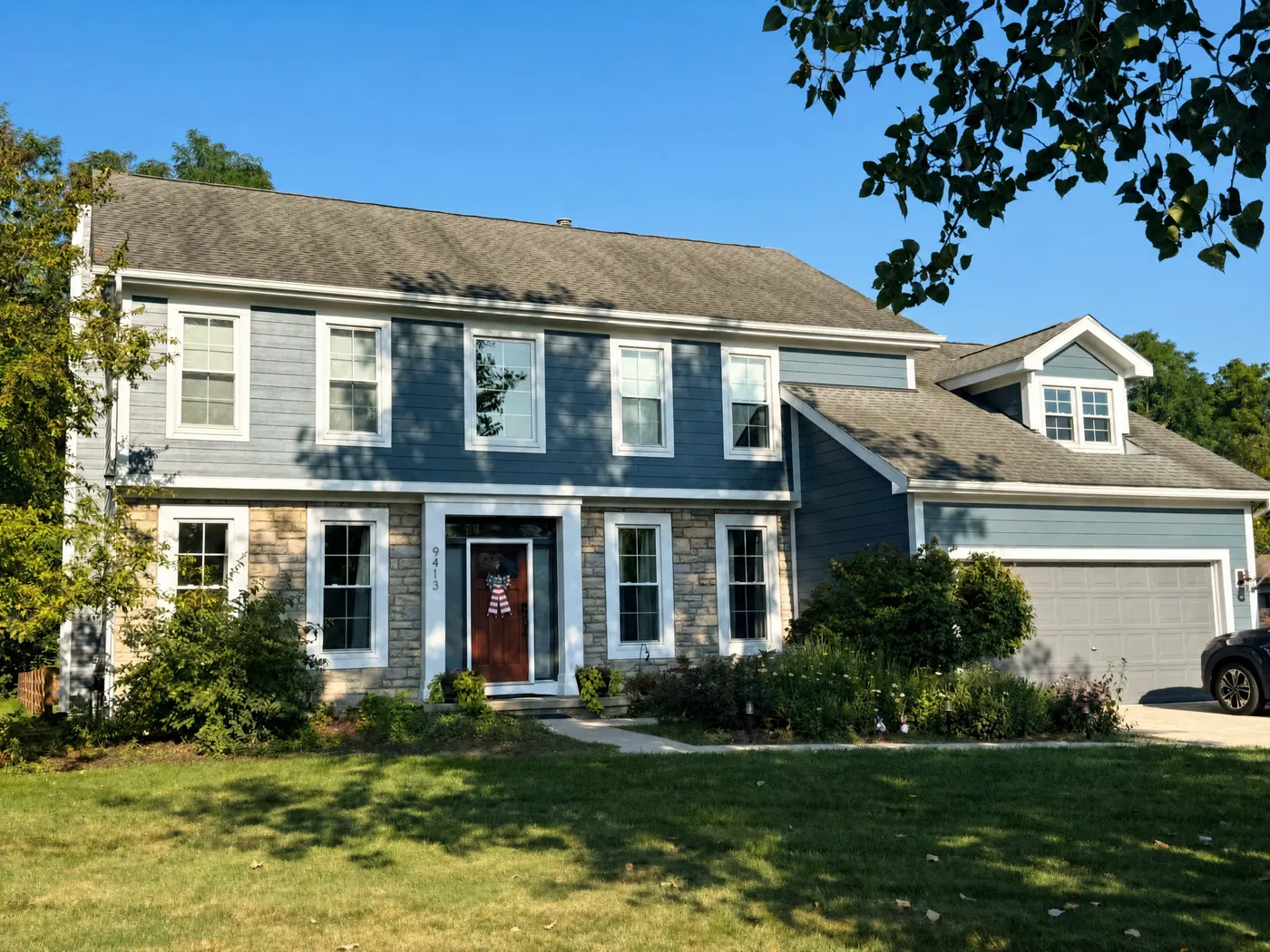
Cincinnati's pre-war streets were built with cladding proportions modern vinyl never quite reproduces: deeper reveals, heavier trim, corners that cast a real shadow. Fiber cement is the one modern material that carries those proportions convincingly, which is why an east-side re-side in Hardie disappears into its street while vinyl on the same house reads as a renovation.
It is also why our Cincinnati Hardie quotes spend real time on trim: the boards are half the look, and the corner and opening details are the other half. A quote that prices planks and hand-waves the trim is describing a different, lesser project.
Weight is a feature and a demand
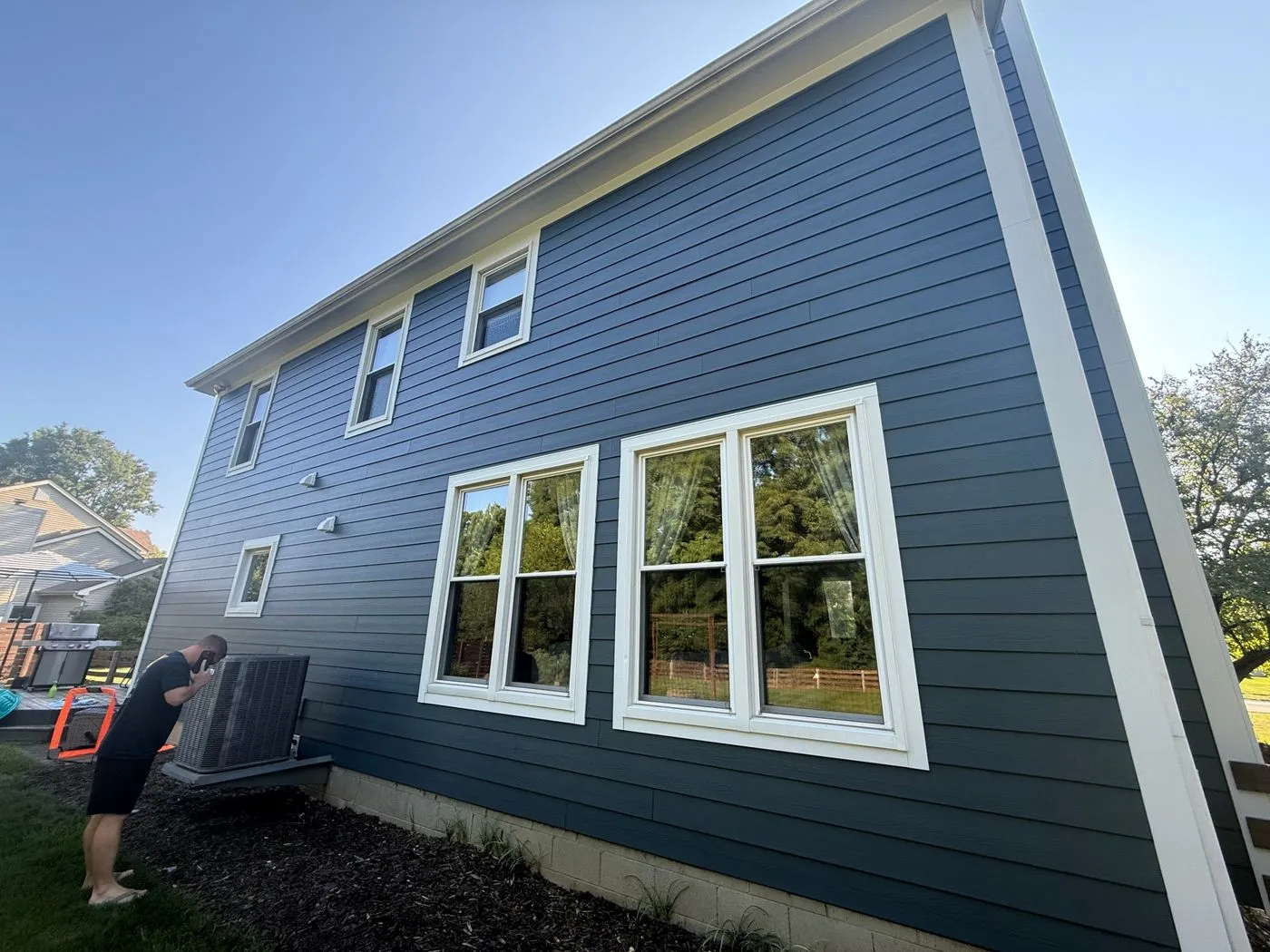
A Hardie plank weighs several times its vinyl equivalent. On the wall that mass is why the material sits flat and quiet; on the job it demands more hands, engineered fastening and a substrate someone verified. Older Cincinnati sheathing varies house to house, and checking it is part of our tear-off, not a surprise afterward.
The clearance rules exist for our winters
Hardie specifies gaps above rooflines, decks and grade because standing water wicks into cut board edges, and wicked water meeting an Ohio Valley freeze splits board from the inside. The most common defect we find in other crews' fiber cement work is board run tight to a roof, drinking meltwater for years. Ours is installed to the gap, photographed, and warrantied.
The photography is not decoration. Every clearance on every elevation goes into the job file at closing, which is what turns a warranty from a promise into a claim that succeeds.
Where we say no
Fiber cement is not automatic. On a simple, large, newer elevation where budget matters more than profile depth, a heavy-gauge vinyl can be the smarter spend, and our quotes say so out loud. Recommending the expensive board everywhere is salesmanship; recommending it where Cincinnati's housing genuinely rewards it is judgment.