Movement is the local tax
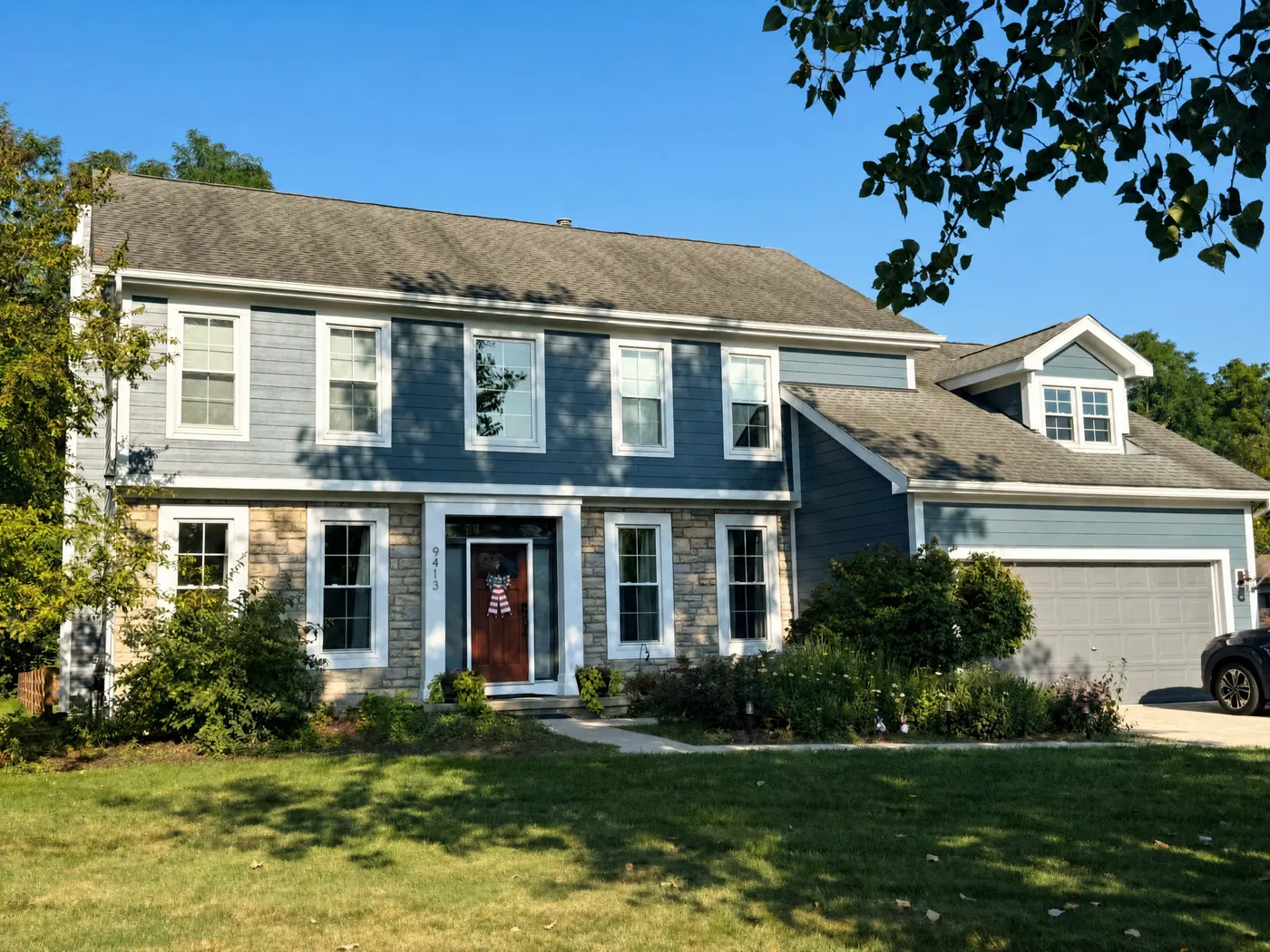
Every cladding on a St. Louis wall pays a movement tax between July and January. Vinyl pays it in visible growth and shrink; caulk pays it in opened joints; fasteners pay it a little each cycle. Fiber cement's near-zero movement is not a brochure abstraction here. It is why ten-year-old Hardie walls in Kirkwood still have tight joints while the same-age vinyl next door has begun to wander.
Against the masonry
Most St. Louis Hardie work terminates against brick somewhere: a gable over a masonry first story, an addition tied to a city house. The board's rigid trim system makes a clean, flashed, permanent line at that junction, where flexible cladding needs a caulk bead that our climate then chews through. The brick interface is where this material most outclasses its alternatives locally.
Heat, taken seriously
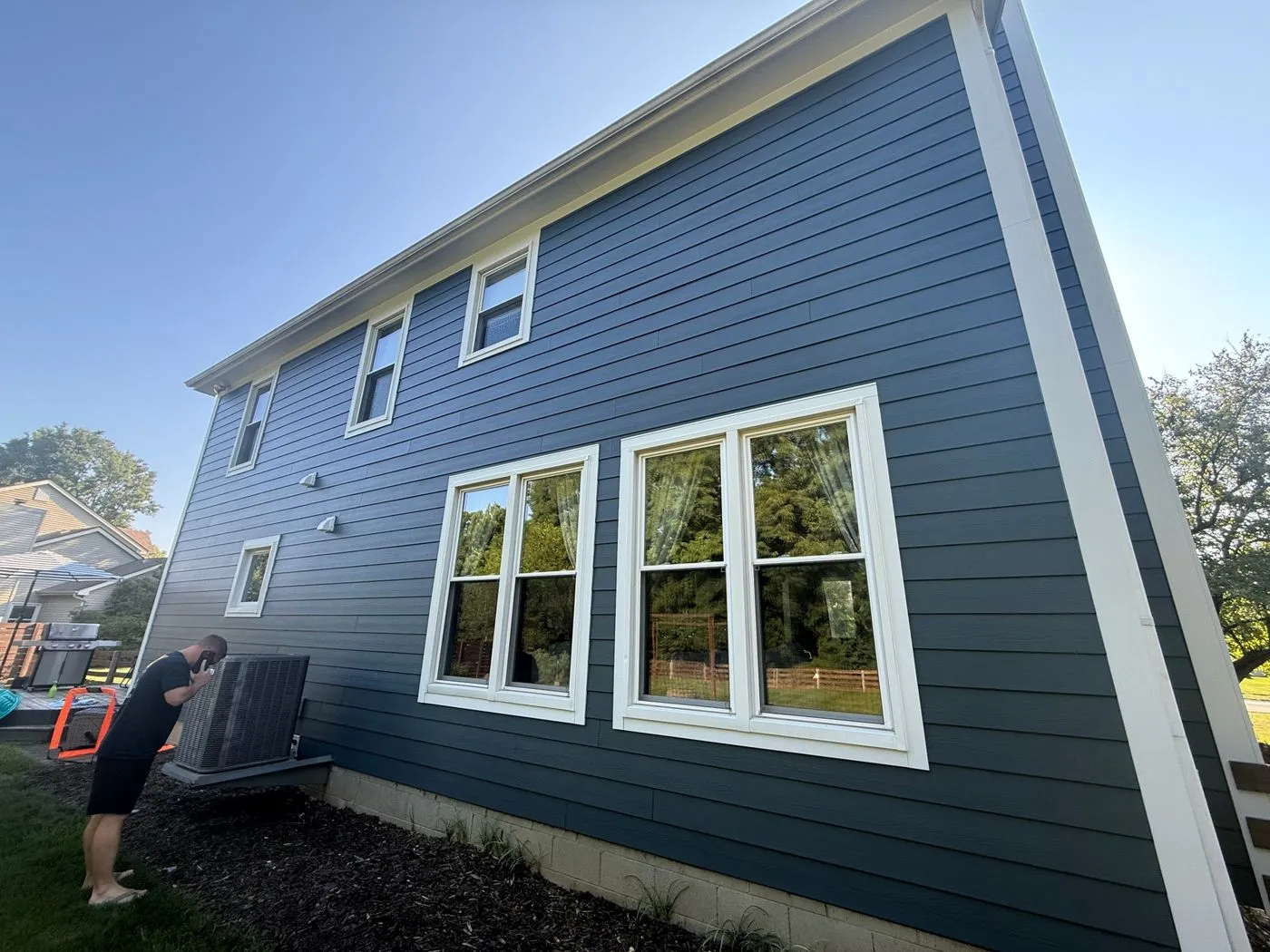
August here disqualifies materials quietly: dark vinyl oil-cans on west walls, foam-backed products outgas their adhesives, site paint on wood blisters. Fiber cement with factory finish is the combination that ignores a 100-degree afternoon, which is why our west-elevation recommendations here are nearly always the same board.
The full ColorPlus palette stays available here too, including the deep shades our heat takes off the table for vinyl. It is a small freedom that matters to homeowners who wanted the dark house and kept being talked out of it.
The honest ledger
The premium is real: heavier board, slower installation, silica-controlled cutting, trim system priced like the durable good it is. The return is a wall whose maintenance calendar has almost nothing on it. On a house you intend to keep, that ledger usually closes; on a flip, it rarely does. We will tell you which quote you are holding.
The terms around the premium stay the same as every Coldstream job: free inspection, a written itemized quote, and no payments until the wall is finished and reviewed with you.