Wind, not slope, is the problem here
There is very little to break the wind across Central Ohio. Storms come across open ground and hit a roofline at full strength, and what fails first is almost always an edge: a ridge cap, a rake edge, the first course above a gable.
So the details we fuss over here are different from a hillside market. Starter course, nailing pattern and ridge attachment are where a Columbus roof is won or lost, and a roof that loses shingles in the first big blow usually lost them at the perimeter.
A suburban ring built within about fifteen years
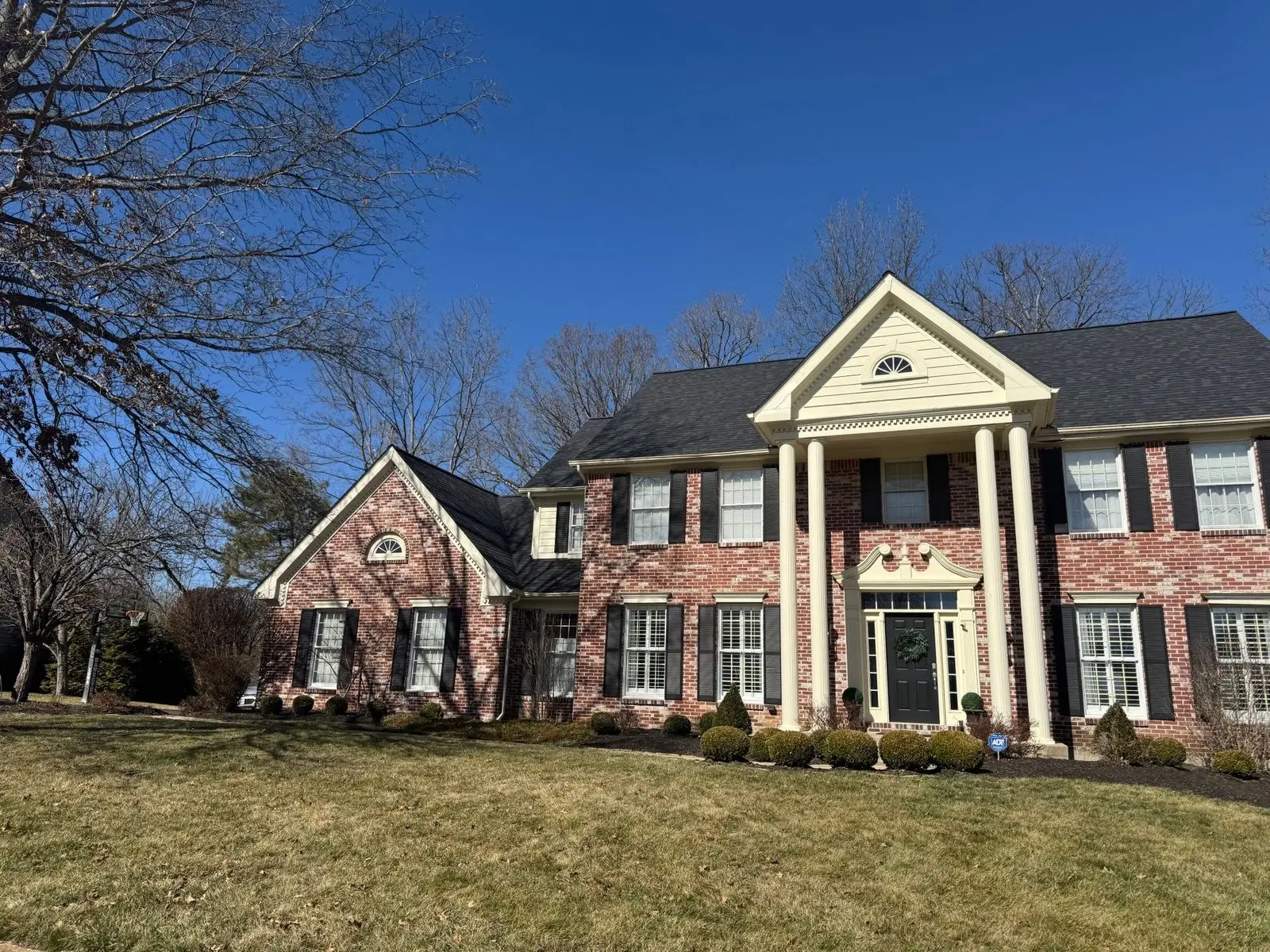
Dublin, Powell, Hilliard, New Albany, Westerville and Gahanna filled in largely between the early nineties and the mid two-thousands. That means an enormous number of houses in this market are hitting twenty-five to thirty years old at the same time. That is exactly when an original builder-grade roof stops being repairable.
It is why a Columbus roof of that age is usually a replacement conversation rather than a repair. If your neighbors are all replacing roofs, that is not a coincidence and it is not a sales pitch. The street went up together.
Ice damming on shallow pitches
A lot of that same building era used shallow pitches and generous overhangs. Snow sits on a shallow pitch instead of shedding, warm attic air melts it from underneath, the water runs to a cold eave and refreezes. The dam it forms pushes water back up under the shingles.
The fix is rarely the roof surface. It is ventilation and ice-and-water protection at the eave, and if someone quotes you a Columbus ice dam without looking in the attic, they are guessing.
The ring is not one place
I-270 makes Columbus easy to describe and misleading to treat as uniform. German Village and Clintonville are pre-war and dense; Galena and Grove City are neither. We cover the whole ring, and the estimate reflects the house rather than the metro average.